

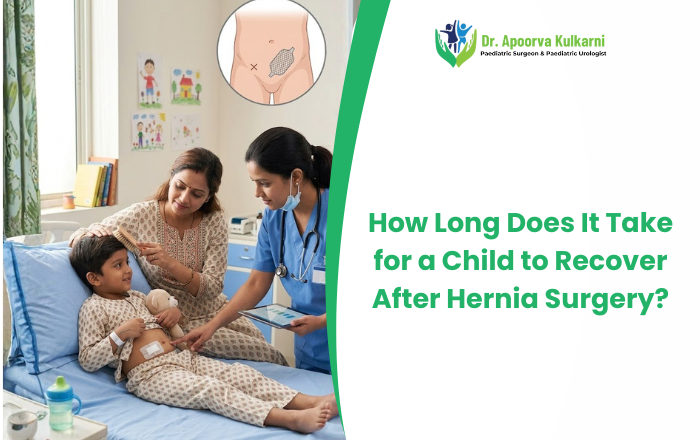
If your child has just been diagnosed with a hernia, or is about to undergo surgery for one, it’s completely natural to worry about what comes next. As a parent, the questions running through your mind are probably simple but urgent: How long will my child be in pain? When can they go back to school? Is this surgery even risky?
The good news is that hernia surgery in children is one of the most common and safest pediatric procedures performed today. Recovery is usually quick, and most kids bounce back faster than parents expect.
Let’s walk through what recovery actually looks like, week by week, so you know exactly what to expect.
What Is a Hernia, and Why Does It Need Surgery?
A hernia occurs when a part of the intestine or abdominal tissue pushes through a weak spot in the muscle wall, often near the groin or belly button. In children, this is usually present from birth due to a small gap that didn’t close properly during development.
Unlike in adults, hernias in children rarely heal on their own. Surgery is the only permanent fix, and doctors generally recommend it as soon as a hernia is diagnosed, to avoid complications like the intestine getting trapped or “incarcerated.”
How Long Does Recovery Actually Take?
Here’s the part every parent wants to know. In most cases, a child recovers from hernia surgery within 1 to 2 weeks for normal daily activities, and full recovery, including a return to sports or rough play, takes about 4 to 6 weeks.
That said, recovery time can vary slightly depending on:
- The child’s age
- Whether the surgery was open or laparoscopic
- Whether it was a single hernia or on both sides
- The child’s overall health
Let’s break the recovery timeline down more clearly.
Day 1–2: Right After Surgery
Most pediatric hernia surgeries are done as day-care procedures, meaning your child can go home the same day or within 24 hours. Immediately after surgery, your child may feel groggy from anesthesia, slightly irritable, or uncomfortable near the incision site.
Mild swelling and bruising around the area is completely normal. Doctors usually prescribe mild pain relief for the first couple of days.
Day 3–7: The First Week
This is when most of the healing happens. Your child may still feel some tenderness, but pain typically decreases noticeably by day 3 or 4. Many children are back to normal eating, playing indoors, and moving around comfortably within this window.
You’ll want to keep the incision area clean and dry, and avoid activities that put pressure on the abdomen, like jumping or rough play.
Week 2: Back to Routine
By the second week, most children can return to school, especially if it doesn’t involve strenuous physical activity like PE class or sports. Energy levels are usually back to near-normal, and the incision has mostly healed on the surface.
Week 3–6: Full Activity Resumes
This is the stretch where full physical activity, including sports, swimming, and playground rough-housing, gets the green light. Your surgeon will confirm this during a follow-up visit, usually checking that the internal healing is complete, not just the visible scar.
Factors That Can Affect Recovery Time
Every child heals differently, and a few things can influence how quickly your little one bounces back:
- Age of the child: Infants and toddlers often heal faster than older children, mainly because their tissue regenerates quickly.
- Type of surgery: Laparoscopic (keyhole) hernia repair usually involves smaller incisions and slightly faster recovery compared to open surgery.
- Activity level post-surgery: Kids who follow rest guidelines properly tend to heal without setbacks, while those who resume rough play too early may experience swelling or discomfort.
- Nutrition and hydration: A healthy, protein-rich diet supports faster tissue healing.
Signs of a Healthy Recovery
It helps to know what “normal” healing looks like so you’re not constantly anxious. Signs your child is recovering well include:
- Gradually reducing pain and swelling
- Normal appetite returning within a few days
- Incision staying clean, dry, and without discharge
- Child becoming more active and playful each day
When to Contact Your Doctor
While complications are rare, it’s important to stay alert. Reach out to your pediatric surgeon if you notice:
- Fever above 100.4°F (38°C)
- Redness, warmth, or pus around the incision
- Persistent vomiting
- Severe or worsening pain after the first few days
- Swelling that suddenly increases
These aren’t common, but catching them early makes treatment simple and stress-free.
Tips to Help Your Child Recover Faster
A little extra care at home can make a real difference in how smoothly recovery goes.
- Keep your child hydrated and offer light, nutritious meals
- Avoid tight clothing that rubs against the incision
- Limit screen time seated in awkward positions that strain the abdomen
- Encourage gentle walking rather than complete bed rest, as light movement supports healing
- Stick to all follow-up appointments, even if your child seems completely fine
Frequently Asked Questions
1. Is hernia surgery safe for young children? Yes. Pediatric hernia repair is one of the safest and most routinely performed surgeries, with a very high success rate and minimal complications when done by an experienced pediatric surgeon.
2. Will my child need to stay overnight in the hospital? Usually not. Most cases are same-day procedures, and children are discharged within a few hours of recovery from anesthesia.
3. Can hernias come back after surgery? Recurrence is uncommon, especially when surgery is performed correctly. Following post-surgery care instructions significantly lowers this risk.
4. When can my child go back to school? Most children can return to school within 5 to 7 days, provided the activities don’t involve heavy physical exertion.
5. Does hernia surgery leave a visible scar? Scarring is usually minimal, especially with laparoscopic techniques, and tends to fade significantly over time.
Have questions? We’re just a message away! Contact us on WhatsApp — Click Here to Chat with Us
A Final Word for Parents
Watching your child go through any surgery, however minor, can feel overwhelming. But hernia surgery in children has an excellent track record of safety and quick recovery. With the right surgical care and a little patience at home, most kids are back to their playful, energetic selves within a few weeks.
If your child has been diagnosed with a hernia or you’re looking for expert guidance on the right time and approach for surgery, it’s worth consulting a specialist who deals specifically with pediatric cases. Dr. Apoorva Kulkarni, a pediatric hernia specialist at MRR Children’s Hospital, Thane, brings over 11+ years of dedicated experience in treating hernias and related conditions in children. His approach combines clinical expertise with genuine care for young patients, helping parents navigate the process with clarity and confidence.
If you have concerns about your child’s hernia or upcoming surgery, a consultation can help you understand the best path forward for your child’s specific needs.
Name – Dr. Apoorva Kulkarni – Pediatric Surgeon-Urologist In Thane
Address: 1st, Pokhran Rd, Shastri Nagar, Vartak Nagar, Thane West, Thane, Maharashtra 400606
Phone: 83696 31672