
If your child has been suffering from constant vomiting, poor weight gain, or burning pain after every meal — and nothing seems to help you may have heard your doctor mention fundoplication surgery in children. That phrase alone can make any parent’s heart race.
Take a breath. You are not alone, and this guide is here to walk you through everything you need to know in plain, simple language no confusing medical terms, no unnecessary fear.
What Is Fundoplication Surgery?
Fundoplication surgery is a procedure used to treat a condition called GERD (gastroesophageal reflux disease) — where stomach acid keeps flowing back up into the food pipe, causing pain, vomiting, and damage over time.
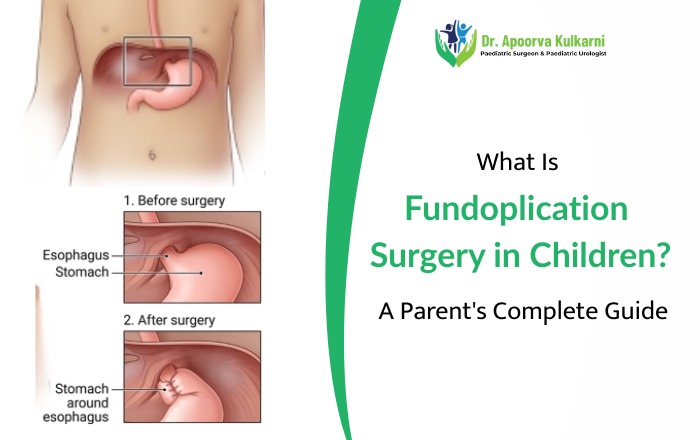
During the surgery, the surgeon wraps the upper part of the stomach around the lower end of the food pipe. Think of it like tightening a loose bottle cap so nothing leaks out. This stops acid from traveling back up and gives your child’s body a chance to heal.
Why Do Children Need This Surgery?
Doctors always try medication first. But fundoplication surgery for children becomes necessary when:
- Medicines have not worked after months of trying
- Your child is not gaining weight properly
- Acid is entering the lungs and causing repeated chest infections
- The food pipe is getting damaged from constant acid exposure
- Your child depends on a feeding tube and reflux keeps causing problems
Studies show that up to 25% of children experience reflux symptoms, and a portion of them develop chronic GERD serious enough to affect their growth and daily life.
Types of Fundoplication Surgery in Children
– Nissen Fundoplication
This is the most common type. The stomach is wrapped fully (360 degrees) around the food pipe. It gives the strongest protection against reflux and is widely used in pediatric fundoplication surgery.
– Partial Fundoplication
For children who have swallowing difficulties, a partial wrap (180–270 degrees) is done. This avoids making swallowing harder after surgery.
– Laparoscopic Surgery
Most children today have laparoscopic fundoplication, done through tiny cuts using a small camera. This means:
- Smaller scars
- Less pain
- Shorter hospital stay (usually 2–3 days)
- Faster recovery
Open surgery is only used in more complex cases.
Is Fundoplication Surgery Safe for Children?
This is every parent’s first question — and a fair one.
- Success rates for pediatric Nissen fundoplication range from 85–95%
- Serious complications are rare when the surgery is done by an experienced pediatric surgeon
- Minor issues like temporary swallowing difficulty or bloating are more common but usually go away within weeks
- Long-term studies show over 80% of children remain symptom-free even 10 years after surgery
In the right situation, fundoplication surgery in children is safe and can truly change a child’s quality of life.
How to Prepare Your Child for Surgery
Medically:
- Blood tests, chest X-ray, and an anesthesia check-up
- An endoscopy or pH test to confirm GERD severity
- Stopping certain medicines as your surgeon advises
Emotionally:
Children feel our worry. Help them by:
- Using simple words — “The doctor is going to fix the part of your tummy that makes you feel sick”
- Reading books about hospital visits together
- Bringing their favorite toy or blanket
- Reminding them you’ll be right there when they wake up
What Happens During the Surgery?
Here’s a simple step-by-step of what takes place:
- Your child is given general anesthesia — they sleep through everything and feel no pain
- Small cuts are made in the belly (3–5 in laparoscopic cases)
- A tiny camera guides the surgeon
- The stomach is wrapped around the lower food pipe and stitched in place
- The cuts are closed the whole thing usually takes 1.5 to 2.5 hours
Recovery After Fundoplication Surgery in Children
- Days 1–3 (Hospital): Your child starts on fluids, pain is managed well, and the team watches for any early issues.
- Week 1–2 (Home): Soft and pureed foods only. Rest is important. A follow-up visit is usually scheduled within 7–10 days.
- Weeks 3–6: Gradual return to normal foods. Most children go back to school within 2–3 weeks. Full recovery usually happens by 4–6 weeks.
- Watch for: Ongoing swallowing trouble, return of vomiting, fever, or redness around the wound — contact your surgeon if any of these occur.
Will the Reflux Come Back?
For most children, GERD surgery brings long-lasting relief. However, children with neurological conditions may have a higher chance of symptoms returning over time. A healthy diet and regular follow-ups help maintain the results.
5 Signs Your Child May Need a Surgical Consultation
- Frequent vomiting with poor weight gain
- Repeated chest infections without a clear cause
- Constant crying or back-arching during or after feeds (in babies)
- Months of reflux medicine with no real improvement
- A hiatal hernia found alongside GERD
Ready to Get Answers? Talk to a Specialist
If your child is still struggling with reflux despite medications, it may be time to have an honest conversation with a pediatric surgeon.
Dr. Apoorva Kulkarni, a trusted Pediatric Surgeon in Thane at MRR Children’s Hospital, has helped many children and families through fundoplication surgery — from the first consultation all the way through recovery.
If you are searching for a pediatric surgeon in Thane, Mumbai who listens, explains clearly, and puts your child’s comfort first book a consultation with Dr. Apoorva Kulkarni at MRR Children’s Hospital today.
Your child deserves to feel better. And you deserve clear answers.